


VERDICT: WE GAVE 4 OUT OF 5 TICKETS AND HERE’S WHY!
Important Note for Visitors:
Despite travellers referring to the Island as Ireland, there is a distinct difference between the north and south.
Northern Ireland is part of the United Kingdom, together with England, Scotland and Wales.
The Republic of Ireland is an independent sovereign country.
This guide (relating to Northern Island) forms part of our complete United Kingdom Travel Guide, featuring scenic road trips, iconic destinations, practical travel advice and honest first-hand travel experiences from across the UK.
- Ireland ⎮Ultimate Travel Guide 🇮🇪
- Day Trip to Belfast, Ireland, Featuring An Amazing Tour in a Taxi
- Top Day Trips From Dublin City
- Watch: Discover Ireland in 24 hrs ⎮ Dublin To Belfast [Video]
- Watch: Discover Ireland in 24 hrs
- Watch: Day Trip To Carrick-A-Rede-Ireland
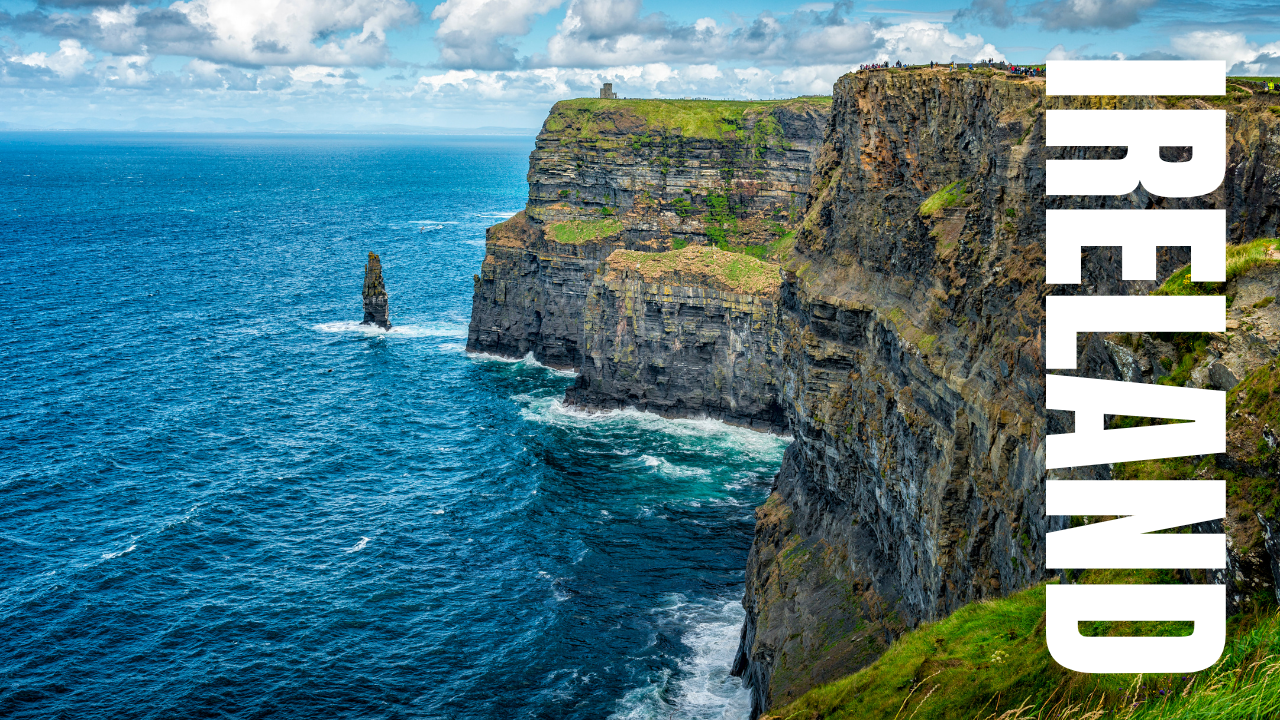
Ireland is a land of green landscapes, lively pub culture, warm hospitality, and stories as old as its ancient stone circles.
From Dublin’s energy to the Wild Atlantic Way, historic castles, coastal drives, and tiny villages where music spills into the streets, Ireland is built for travellers who want scenery and soul in the same trip. Our Ireland guides highlight top attractions, scenic routes, local food, and practical planning tips to help you explore the island with ease. You’ll even get to see a film backdrop for the Game of Thrones!
Exploring two distinct parts of Ireland through historic streets, dramatic coastlines and Belfast’s complex past
Our Three-Day Ireland Adventure
We had the opportunity to spend three days in Ireland while travelling back to Canada following a visit to England.
Three days would never be enough to explore the entire island, but we were determined to use our limited time well. Our plans included Dublin’s historic centre, the lively Temple Bar district, a walk beside the River Liffey and two ambitious trips into Northern Ireland.
We arrived in Dublin during the late afternoon and headed directly to our hotel. By the time we checked in and settled into the room, there was little time left for sightseeing. Instead, we reviewed our carefully planned itinerary and prepared ourselves for three very full days.
Ireland may look relatively small on a map, but its historic cities, rugged coastlines and beautiful countryside deserve far more time than we had available.

Exploring Dublin
Dublin is an excellent city to explore on foot. Many of its most recognizable landmarks are concentrated around the River Liffey, which flows through the centre and divides the city into its north and south sides.
Our plans included Trinity College, Dublin Castle, the shopping streets around Grafton Street and the historic buildings lining the river. Trinity College is particularly famous for the Book of Kells and its magnificent Old Library, while Dublin Castle reflects centuries of British rule and the development of modern Ireland.
Other major attractions include St Patrick’s Cathedral, Christ Church Cathedral, Kilmainham Gaol, the Guinness Storehouse and the General Post Office on O’Connell Street. The GPO played a central role in the 1916 Easter Rising and remains one of Dublin’s most important historic landmarks.
What we enjoyed most was the atmosphere. Dublin felt historic without being trapped in its past. Traditional pubs, busy cafés, modern restaurants, Georgian architecture and live music all seemed to exist naturally beside one another.

Temple Bar
No first visit to Dublin would feel complete without walking through Temple Bar.
Situated on the south side of the River Liffey, Temple Bar is known for its cobbled streets, colourful pub fronts, restaurants, cultural venues and live traditional music. The area becomes especially lively during the evening when musicians perform inside many of the pubs.
The famous red exterior of The Temple Bar Pub attracts enormous numbers of visitors, but the district is more than one heavily photographed building. It also contains galleries, independent shops, performance venues, the Irish Film Institute and the weekend Temple Bar Food Market.
We enjoyed wandering through the narrow streets and taking in the atmosphere. It was busy and undeniably touristy, and prices can be higher than elsewhere in Dublin. Even so, it remains a fun district to experience at least once.
For a quieter and often more local evening, visitors can also explore pubs away from the main Temple Bar streets.
Walking Along the River Liffey
A walk beside the River Liffey provides an easy way to understand Dublin’s layout. Numerous bridges connect the two sides of the city, but the best known is the Ha’penny Bridge. Opened in 1816, the pedestrian bridge received its nickname from the half-penny toll once charged to cross it.
Walking east along the river brings visitors towards the Custom House and the revitalized Dublin Docklands. The Docklands area includes modern office buildings, public spaces, the Samuel Beckett Bridge and EPIC The Irish Emigration Museum.
The riverfront also provides convenient access to O’Connell Street, the General Post Office and several memorials connected to Irish history. We found it an enjoyable route because it combined major landmarks with everyday views of the city.
Understanding Ireland’s Political Geography
The word Ireland can refer to the entire island or, in everyday conversation, to the independent country officially named Ireland and commonly called the Republic of Ireland. For visitors, understanding the difference is important.
The island contains two very separate political jurisdictions: Republic of Ireland and Northern Island (part of the UK)
Ireland was partitioned in 1921. The Irish Free State was established in 1922 and developed into today’s independent Republic of Ireland. Northern Ireland remained within the United Kingdom.
This division is not merely historic. It continues to influence identity and politics, particularly in Northern Ireland.
The Republic of Ireland
The Republic of Ireland is a parliamentary democracy with an elected president serving as head of state. The Taoiseach, pronounced approximately “TEE-shukh” is the prime minister and head of government.
The country is a member of the European Union and uses the euro. Dublin is its capital and largest city.
Visitors will see both Irish and English on road signs and public buildings. Irish, known as Gaeilge, is the first official language under the Constitution, while English is the language most visitors will hear in daily use.
The Republic offers an enormous range of travel experiences, including Dublin, Galway, Cork, Killarney, the Cliffs of Moher, the Ring of Kerry, Connemara and the Wild Atlantic Way.
Northern Ireland
Northern Ireland is part of the United Kingdom and uses the pound sterling, not the euro. Belfast is its capital and largest city.
Politics in Northern Ireland has historically centred on two broad traditions. Unionists and loyalists generally support remaining within the United Kingdom, while nationalists and republicans generally favour closer ties with the Republic and, ultimately, a united Ireland.
These descriptions cover broad political positions and should not be used to make assumptions about individual people.
From the late 1960s until the 1990s, Northern Ireland experienced a period of political violence known as the Troubles. The conflict involved republican and loyalist paramilitary organizations, British security forces and deep divisions over civil rights, national identity and Northern Ireland’s constitutional position.
The Belfast Agreement, commonly called the Good Friday Agreement, was signed on April 10, 1998. It established a power-sharing system and confirmed the principle of consent: Northern Ireland remains part of the United Kingdom unless a majority of its people votes for constitutional change.
Today, Belfast is a modern, welcoming and forward-looking city. Its history remains visible, but visitors should not make the mistake of viewing Northern Ireland entirely through the Troubles.
VISITOR INFORMATION: Crossing Between the Two Irelands
There are no routine immigration checkpoints at the land border between the Republic of Ireland and Northern Ireland. When travelling by road, the most noticeable changes are often the road signs, speed measurements and currency.
In the Republic:
- Currency is the euro
- Distances and speed limits are displayed in kilometres
- Fuel is sold by the litre in euros
In Northern Ireland:
- Currency is the pound sterling
- Speed limits are displayed in miles per hour
- Road distances are generally shown in miles
Credit cards are widely accepted on both sides, but carrying a small amount of each currency can still be useful.
International visitors must also meet the entry requirements for both jurisdictions. Canadian visitors who enter Northern Ireland from the Republic are entering the United Kingdom and generally require a valid UK Electronic Travel Authorization, even though there is no immigration checkpoint at the land border. Requirements can change, so travellers should check official Irish, UK and Canadian government guidance before departure.

Our Journey to the Giant’s Causeway
One of our priorities was visiting the Giant’s Causeway on the northern coast of County Antrim.
The drive from Dublin is long for a day trip, but the changing scenery helped make the journey part of the experience. After crossing into Northern Ireland, we continued towards one of the island’s most recognizable natural landmarks.
The Giant’s Causeway contains more than 40,000 interlocking basalt columns created by volcanic activity almost 60 million years ago. As lava cooled and contracted, it fractured into the remarkable geometric shapes visible along the shoreline today.
Science provides the geological explanation, but Irish legend offers a more entertaining version. According to the best-known story, the giant Finn McCool constructed the causeway across the sea to confront the Scottish giant Benandonner.
The Giant’s Causeway became Northern Ireland’s first UNESCO World Heritage Site in 1986.
Standing among the columns gave us a much better appreciation of their scale. The surrounding cliffs, Atlantic Ocean and constantly changing weather created a setting every bit as impressive as the rock formations themselves.
The coastline is publicly accessible, but the paid Visitor Experience includes reserved parking, exhibitions, audio guides and guided interpretation. Pre-booking is recommended, particularly during the busiest months.

Carrick-a-Rede Rope Bridge
Our Causeway Coast experience also included Carrick-a-Rede Rope Bridge, near Ballintoy.
The bridge was first erected by salmon fishermen in 1755. It spans a 20-metre chasm between the mainland cliffs and Carrick-a-Rede Island and hangs almost 30 metres above the sea.
Crossing it adds a definite burst of adventure to the coastal scenery. The bridge moves underfoot, the water is visible below and the exposed location makes even a short crossing feel dramatic.
The modern Carrick-a-Rede Visitor Experience includes reserved parking, access to the bridge, historical walks and talks, visitor facilities and the renovated Weighbridge Tearoom. Most visitors should allow approximately 90 minutes for the complete experience.
Reaching the bridge requires a coastal walk with slopes, uneven ground and two long sets of steps after the first accessible section. Strong winds can force the bridge to close, so visitors should check its operating status before travelling. Advance booking is essential for anyone planning to cross.
The combination of dramatic cliffs, coastal views and the thrill of crossing the bridge made this one of our most memorable stops.
Belfast: More Than Its Difficult Past
We also wanted to spend time in Belfast, Northern Ireland’s energetic capital.
A guided day tour from Dublin was the most practical option for our limited schedule. It allowed us to reach the main attractions without worrying about navigation, parking or coordinating transportation between locations.
Belfast has undergone a remarkable transformation. The city is now known for its restaurants, music, universities, maritime heritage and regenerated waterfront. It is also a UNESCO City of Music and the birthplace of writers, performers and cultural figures including C.S. Lewis, Van Morrison and Kenneth Branagh.
Important places to visit include Belfast City Hall, St George’s Market, the Cathedral Quarter, Queen’s University, the Botanic Gardens, Crumlin Road Gaol and the Maritime Mile.
The Titanic Belfast Experience
The Titanic Belfast museum was a major highlight of our visit.
RMS Titanic was designed, constructed and launched in Belfast by the Harland & Wolff shipyard. The museum occupies a striking modern building beside the historic slipways where Titanic and her sister ship Olympic were built.
The self-guided Titanic Experience follows the story from Belfast’s industrial growth and the ship’s construction to its launch, maiden voyage, sinking and enduring legacy. Interactive galleries recreate parts of the shipyard and introduce visitors to the workers, designers and passengers connected to Titanic.
Admission also includes access to SS Nomadic, Titanic’s restored tender and the last surviving White Star Line vessel. Sadly, there was not enough time to visit this exhibit.
Titanic Belfast is not simply a museum about a maritime disaster. It also explains Belfast’s shipbuilding industry and the people whose skill and labour created one of the world’s most famous ships.

Our Belfast Black Cab Tour
Watch Video: One of the most thought-provoking parts of our visit was a private black cab tour through Belfast communities closely associated with the Troubles.
Our driver took us through areas around the Falls Road and Shankill Road, where political murals, memorials and sections of the peace walls remain visible. These physical landmarks help explain how deeply the conflict affected ordinary neighbourhoods.
The tour gave us a closer look at events we had previously known mainly through television reports from the 1970s onward. Hearing local stories while standing in the communities where the events occurred made the history feel much more immediate.
Black cab tours can be valuable, but visitors should remember that guides may present history through their own community’s experience. No single tour can represent every perspective. Listening respectfully, asking thoughtful questions and recognizing the suffering experienced across communities is the best approach.
The political murals and peace walls are not merely sightseeing backdrops. They represent loss, identity, division and a continuing peace process. We felt it was important to treat the experience with the seriousness it deserved.
Is Three Days Enough for Ireland?
Three days allowed us to experience Dublin, Belfast and the Causeway Coast, but it was an extremely compact itinerary.
For a similar trip, we would recommend:
- At least one full day for central Dublin
- One full day for Belfast and Titanic Belfast
- One full day for the Giant’s Causeway and Carrick-a-Rede
- Additional time for slower travel, smaller communities and the countryside
A guided excursion made our schedule possible, but staying overnight in Belfast would create a far more relaxed experience. Ideally, we would allow at least five to seven days for Dublin and Northern Ireland alone.
Our Final Thoughts
Despite having only a few days, we had an amazing time in Ireland.
Dublin gave us historic streets, lively pubs and memorable walks beside the River Liffey. The Giant’s Causeway delivered some of the most extraordinary coastal scenery we had seen, while Carrick-a-Rede added a genuine sense of adventure.
Belfast brought together maritime achievement, modern regeneration and a difficult political history that deserves to be understood carefully. Titanic Belfast was outstanding, and our black cab tour gave us a perspective that we could never have gained simply by walking through the city alone.
Most importantly, the trip showed us how much of Ireland we still have to discover. Three days provided an excellent introduction, but it was only an introduction.
We fully intend to return—and next time, we plan to give both the Republic of Ireland and Northern Ireland the time they deserve.
Recommended Belfast Day Tour
For visitors based in Dublin, an organized Belfast excursion can make it easier to experience Northern Ireland within a limited itinerary.
With every trip, we offer feedback to travel companies along with honest views for you, the reader. We rate adventures on a scale of one to five tickets, judged on quality, service, memorability, and price. A perfect ‘Ticket Rating’ of a five-ticket score means the experience was flawless and we’d eagerly return. Your desire to go back is the ultimate measure of a trip’s worth. Exclusive to My Return Ticket.
